
A quick heads-up: This post contains affiliate links. If you buy something through one of my links, I may earn a commission at no additional cost to you. As an Amazon Associate I earn from qualifying purchases.
Glue: sticky, messy, fundamental to building tiny worlds—and definitely not all made equally!
The trial and error of finding the perfect glue for every part of your miniatures can be time-consuming and frustrating. There is nothing quite like sticking tiny legs on a tiny chair, only for the legs to stick to your fingers instead of the fabric.
And don’t get me started on gluing walls together, holding them for what feels like an entire episode of Supernatural, and experiencing the short-lived satisfaction of watching them stand on their own… before it all comes crumbling down. That’s a fight even Sam and Dean would walk away from.
But! I did all that so you don’t have to.
After plenty of sticky fingers, crooked furniture, and structural failures, I’ve figured out which glues I reach for depending on what I’m building. So let’s talk about what works, what doesn’t, and which bottle you should grab before trusting it with your next tiny world.
iCraft Ultra Bond — The One I Reach for Most

If you only want to buy one glue for building miniatures, this is the one I’d start with.
My bottle of iCraft Ultra Bond has been through it. I’ve used it so much that I can barely read the label anymore—and if that isn’t a glowing recommendation for a bottle of glue, I don’t know what is.
This is my everyday, I’m-building-something-tiny-and-need-it-to-stay-that-way glue. I reach for it constantly because it works for just about everything I encounter in a miniature build. Wood, paper, little decorative pieces—this is usually the first bottle I grab before deciding I need something more specialized.
Best for: Pretty much everything. If you’re just starting out and only want one glue on your worktable, I’d make it this one.
E6000 — When the Structure Actually Needs to Stay Standing
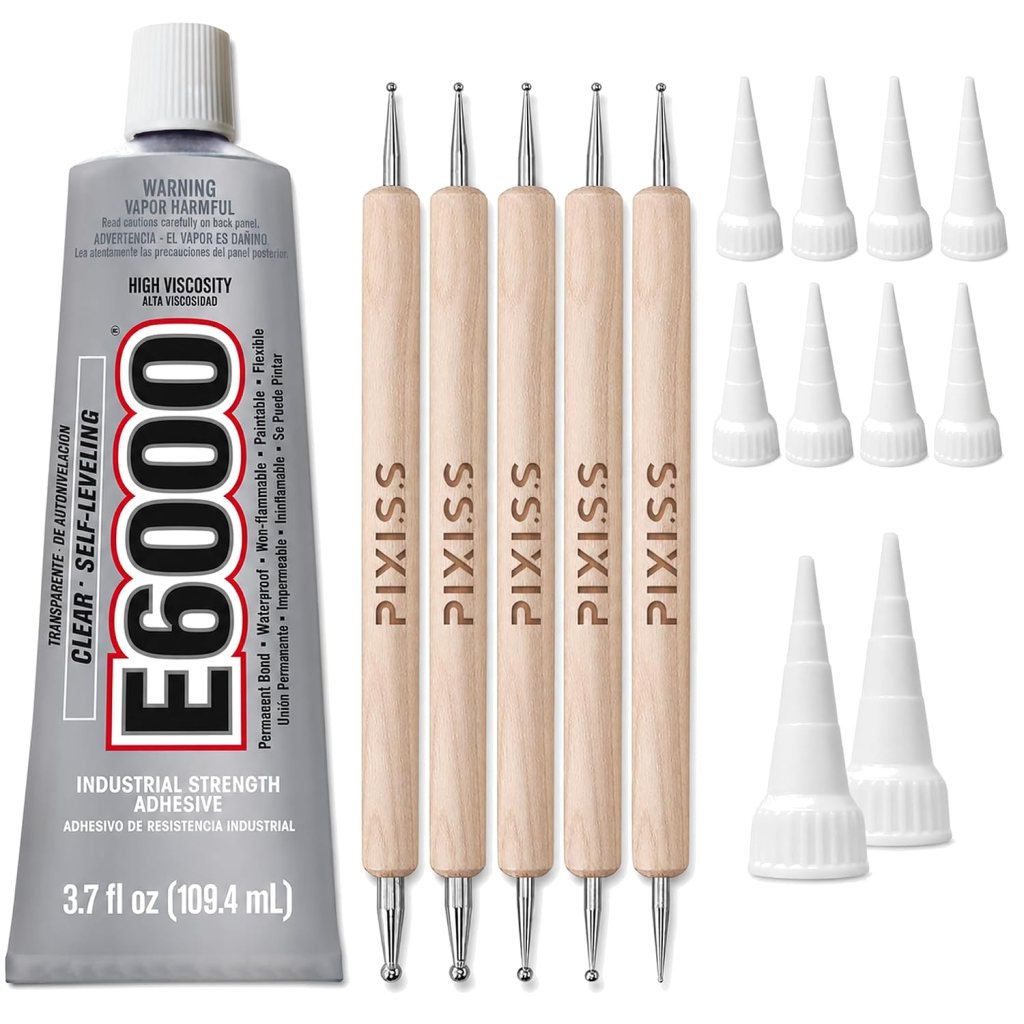
Remember those walls I mentioned holding together for an entire episode of Supernatural?
This is the kind of job where I want my E6000.
It’s my second most-used adhesive and the one I reach for when I’m working with larger, more foundational pieces. Tiny furniture and decorations are one thing, but when I’m putting together the actual structure of a miniature, I want something I can trust to hold.
I especially like having the precision applicator tips. E6000 is serious glue, and we’re building tiny things. Being able to control where it goes makes a huge difference.
Best for: Walls, larger structural pieces, foundations, and anything that makes me think, I really don’t want to glue this twice.
Super Glue — When I’m Done Asking Nicely

Sometimes you don’t need working time. You don’t need to reposition something six times. You don’t need to lovingly hold two microscopic pieces together while contemplating the choices that led you here.
You need it to STICK.
That’s when I reach for super glue.
It’s great when I need two pieces joined quickly, but I’ve also found it surprisingly useful for stubborn fabric. Fabric can be incredibly annoying at miniature scale, especially when a tiny edge or corner absolutely refuses to stay where you’ve put it. A tiny amount of super glue can convince it otherwise.
The tradeoff is that you don’t have nearly as much time to change your mind, so I don’t use it for everything.
Best for: Quick bonds, stubborn pieces, and fabric that has chosen violence.
Elmer’s Disappearing Purple Glue Sticks — The Book-Making MVP

Yes.
The purple school glue sticks.
Hear me out.
Miniature kits have an incredible ability to look at a perfectly reasonable person and say, Would you like to individually assemble 87 books today?
For builds with lots of books—or really any project involving a lot of paper—these are fantastic. They’re quick, they’re easy to control, and you don’t have to deal with liquid glue soaking into the paper while you’re trying to fold and assemble tiny pieces.
The purple color is also genuinely helpful because you can see exactly where you’ve applied the glue before it dries clear.
I wouldn’t use a glue stick to hold up the walls of my miniature house, but when I’m staring down a pile of tiny books that all need covers? Pass me the purple glue stick.
Best for: Paper, book covers, printed pieces, and builds that have decided you need your own miniature library.
Which glue should I grab?
| If I’m working with… | I’m probably grabbing… |
|---|---|
| General miniature assembly | iCraft Ultra Bond |
| Large/foundational pieces | E6000 |
| Something that needs to bond quickly | Super glue |
| Stubborn fabric | Super glue |
| Paper & printed pieces | Glue stick |
| Approximately 700 tiny books | Glue stick + patience |
Let’s Boil It Down – Which Glue Do You Actually Need?
If you’re staring at your first miniature kit wondering whether you really need an entire drawer dedicated to adhesives, the answer is absolutely not.
Start with a good, versatile glue. For me, that’s iCraft Ultra Bond. It’s the bottle I reach for first, the one I’ve nearly loved the label off of, and the glue I’d recommend keeping on hand if you’re just getting started.
And if you really want to give the little tube of glue that came with your kit a chance, I get it. It’s already there, it’s technically supposed to do the job, and maybe yours will behave better than some of the ones I’ve fought with.
Give it a shot.
But I’d also go ahead and save this post for when you reach your limit with it.
As you build more tiny worlds, you’ll eventually discover that some materials are simply determined to make your life difficult. That’s when it’s worth branching out. E6000 can tackle the bigger structural jobs, super glue is there when something needs to stay put right now, and the humble purple glue stick will save your sanity when your kit decides what you really needed in your life was 87 individually assembled books.
The biggest thing I’ve learned is that there really isn’t one perfect glue for every miniature project. Having the right glue for the job can be the difference between enjoying all those tiny details and spending twenty minutes holding a wall in place just to watch it collapse the second you let go.
So start with what you have, add better options as you need them, and remember: use less glue than you think you need.
Your tiny furniture—and your fingers—will thank you.


Leave a Reply